What is the difference between gold-filled and gold-plated - a clear guide to choosing wisely
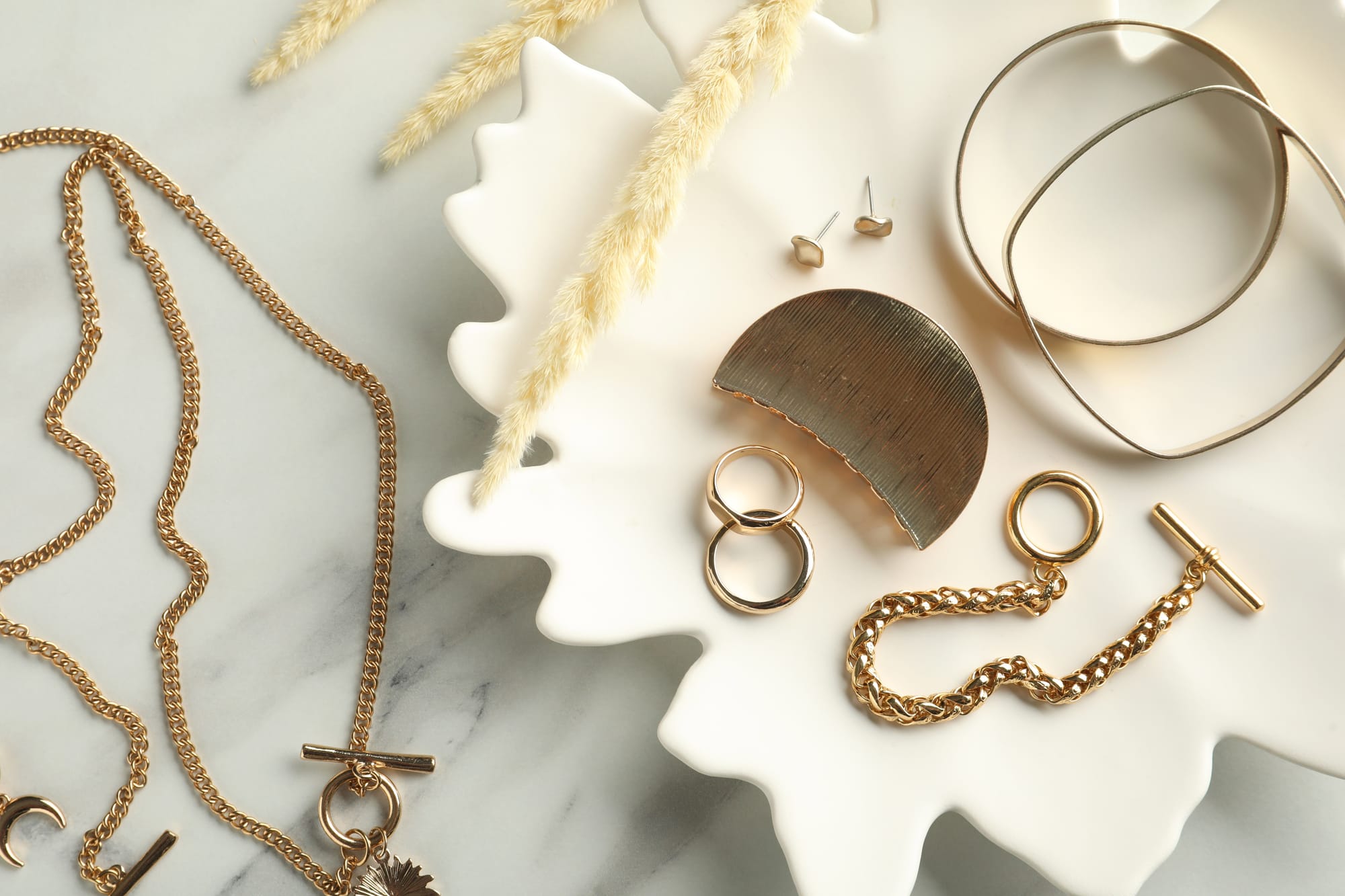
The question of what is the difference between gold-filled and gold-plated comes up again and again when looking for beautiful and durable jewelry. The difference affects the shine, durability, and the feel on the skin on a daily basis. Anyone buying jewelry for an active lifestyle wants to know if it will stay shiny or fade quickly. In this guide, we will break down the terms in a simple way, without confusing marketing, so that you can choose with confidence. We will also touch on the question of price and understand what you get at each level.
Some people prefer a luxurious look on an affordable budget, while others are looking for a long-term investment. Sometimes the difference depends not only on the material but also on the quality of the production and the way it is cared for. Whether you love delicate jewelry for everyday wear or are looking for a meaningful gift item, it is worth familiarizing yourself with the advantages and disadvantages of each option in advance. This way you will save yourself disappointment and choose an item that will delight you over the long term.
What is the difference between gold filled and gold plated in everyday use?
The difference between gold-filled and gold-plated in everyday use lies mainly in the thickness of the gold layer and the way it is attached to the base metal. Gold-filled is made of a thicker layer that is attached with pressure and heat, and is therefore more resistant to wear. Gold-plated is a thin layer that is worn on a base metal; it looks beautiful but is more sensitive to contact with water and perfume. The difference is especially noticeable after months of continuous use.
During workouts, typing, or hand washing, a thin layer wears off faster. On the other hand, gold plating can be suitable for those who like to change their jewelry often or choose a trendy item for the season. It is important to remember that durability also depends on lifestyle and the degree of friction with the fabric. Those who wear jewelry every day will benefit from a more stable material, while those who use it only for events will see a less noticeable difference.
Another sign is the change in color after cleaning: in gold-filled, the color remains stable over time, while in thin plating, the base metal may be exposed after a period of time. If you are unsure, ask to see items that have been worn over time to understand how the material actually behaves.
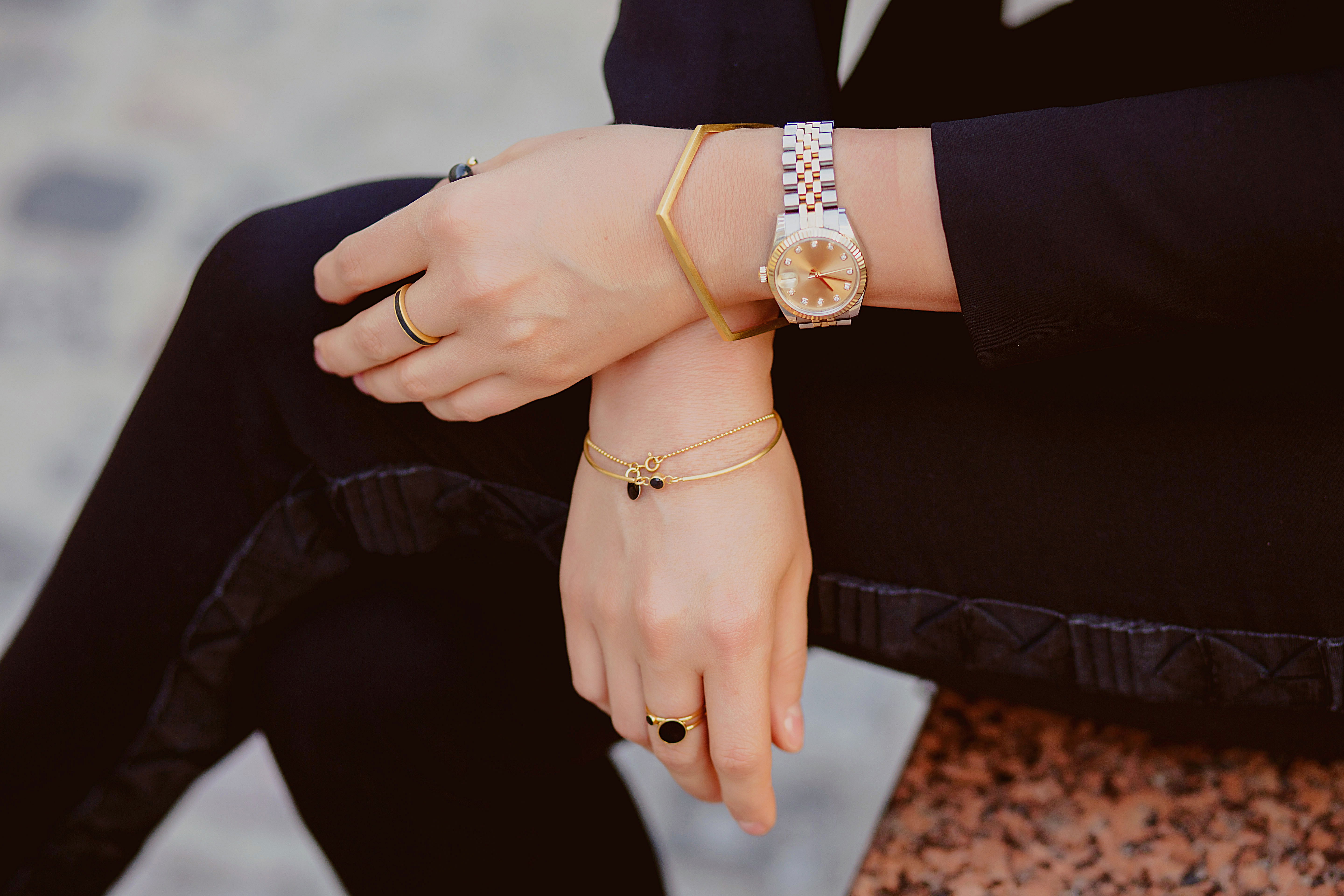
Layer thickness, material bonding, and a finish that feels luxurious
The thickness of the layer is measured in microns, and this is a figure that is not always indicated on the label. It is worth asking whether it is 14K or 18K gold, and what is the degree of connection between the layers. In quality designed jewelry, you can also see the level of polishing, the precise connection between the links, and the uniformity of color. If you choose jewelry with a personal design, it is worth making sure that the creator uses materials that stand up to daily use and not just decorative plating.
The type of clasp and the inside are also important. A thicker layer will feel smoother on the skin and reduce the chance of peeling at the edges. Examine the piece in natural light to see if there are any discolorations or blemishes. If it has stones, make sure th